
Building What Climate Solutions Depend On: Inside EarthGrid’s Mission
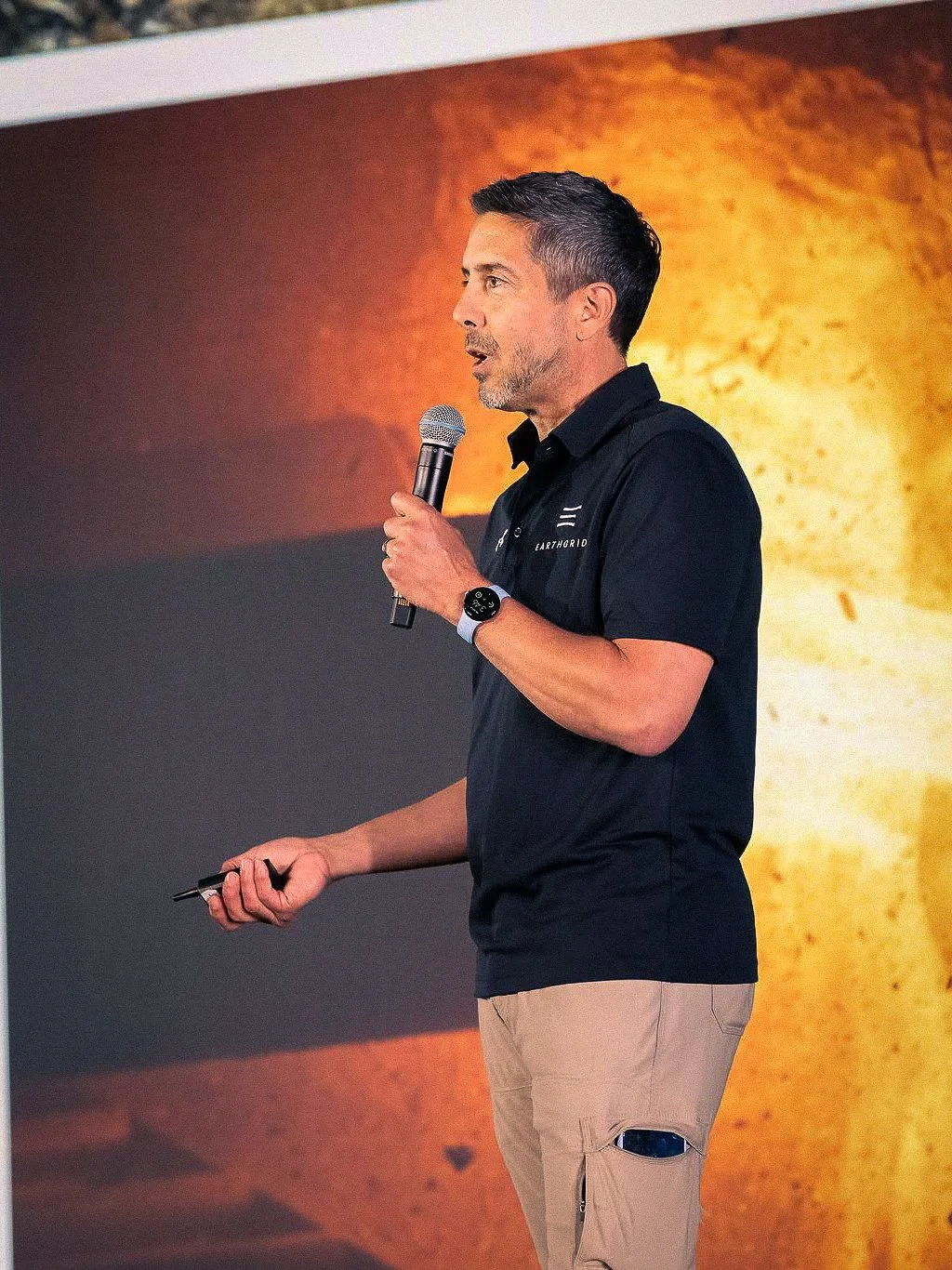
Troy Helming
Troy Helming is a serial entrepreneur and clean energy pioneer known for building and scaling impactful companies in the renewable energy sector. With multiple successful exits, he has established himself as a leader who turns complex, large-scale challenges into commercially viable solutions.
As CEO of EarthGrid, Troy focuses on solving one of the biggest barriers to the energy transition: infrastructure. Through groundbreaking plasma tunneling technology, his work enables faster, more affordable, and less disruptive construction of underground systems essential for clean energy, water, and broadband.
His approach to impact is deeply systems-driven. Rather than focusing only on visible climate solutions, he targets the foundational infrastructure that allows those solutions to scale. By doing so, he unlocks broader societal benefits, from decarbonization to improved resilience and access.
Through a public benefit corporation model, Troy ensures that impact and profitability go hand in hand, creating measurable, lasting change at global scale.
“If we don’t unlock faster, cleaner ways to build underground, we won’t miss climate targets because of energy, but because it can’t reach people.”
Troy, tell us about how your work intersects with the impact space.
At EarthGrid, my work sits at the intersection of hard tech, climate action, and equitable infrastructure. We’re pioneering plasma-boring technology for tunneling, trenching and excavation, designed to radically reduce the cost, time, and environmental impact of underground construction. That means enabling more transmission lines for clean energy, more resilient water systems, and more affordable broadband; all without the massive carbon footprint or community disruption associated with traditional heavy construction.
The impact space isn’t a side note for us; it’s the core of why we exist. The world cannot decarbonize or electrify fast enough with today’s bottlenecked infrastructure. By making it faster and cheaper to build underground, we’re unlocking the physical pathways needed for renewables, grid expansion, and climate-resilient communities.
My role as CEO is to guide both the technology and the mission: scaling a new class of clean-infrastructure tooling while staying grounded in safety, environmental responsibility, and public benefit. We’re a public benefit corporation by design, our mandate is to create tangible, measurable impact while building a commercially viable company. In short, our work is about accelerating the clean-energy transition by reinventing the tools that make it possible.
What is your own definition of impact?
Bringing about tangible, measurable positive change to society.
Troy, what do you see as the most important issue to address in the next 10 years?
One of the most critical issues we must solve in the next decade is the bottleneck in building the physical infrastructure that the clean-energy transition depends on. We already have the technologies: solar, wind, storage, but none of them scale without dramatically expanding transmission, water systems, and resilient underground networks. Today, infrastructure is too slow, too expensive, and too environmentally destructive to build at the pace climate realities demand.
If we don’t unlock faster, cleaner, safer ways to build underground, we will miss our global climate targets; not because the energy doesn’t exist, but because it can’t reach the places that need it.
Solving the infrastructure bottleneck is the foundation for everything: decarbonization, climate resilience, broadband access, water security, and equitable development. It’s the quiet, structural challenge that determines whether all other climate solutions can actually work at scale.
What is the greatest challenge you face to scale your impact?
In the underground infrastructure and clean-energy sector, one of the biggest challenges slowing impact is that our deployment tools are outdated. We’re trying to build 21st-century energy systems with 50-year-old methods that are slow, expensive, and disruptive to communities. Even when the will and funding exist, the pace of construction becomes the bottleneck.
Another major challenge is permitting. The intent is good; protecting communities and environments, but the process is fragmented and slow. In many cases, it takes longer to permit a transmission line than to build it. That mismatch between urgency and bureaucracy creates massive delays in climate and resilience projects.
Finally, impact capital in this space often favors “visible” climate solutions over enabling infrastructure. But solving the energy transition requires investing in the backbone technologies that allow everything else to scale.
In short, the biggest challenges are slow deployment tools, slow permitting, and slow capital alignment when climate timelines demand speed.
“Clean energy isn’t the problem, infrastructure is; without fixing how we build, nothing scales.”
Troy, what is your long-term vision and how do you measure & quantify your impact?
Our long-term vision is to make clean, resilient underground infrastructure fast, affordable, and accessible enough to unlock the global energy transition. If we can remove the bottlenecks to building transmission, water systems, and broadband, we enable every other climate solution to scale. We measure impact through tangible, engineering-driven metrics: the speed and cost reductions we achieve in underground construction; the carbon emissions avoided compared to conventional trenching and tunneling; the miles of transmission and utilities we make possible; and the communities gaining safer, more resilient infrastructure.
What are some misconceptions you’ve noticed regarding what “impact” is all about?
One of the biggest misconceptions I see is the idea that “impact” is a feel-good add-on rather than a hard, technical requirement for scaling the future. In reality, impactful solutions often involve deep engineering, long timelines, and infrastructure that isn’t glamorous but absolutely essential. People tend to imagine impact as solar panels, EVs, or tree-planting; they don’t always think about the "boring" backbone that makes all climate solutions actually deployable.
Another misconception is that impact and financial performance are trade-offs. In my experience, the opposite is true. The world’s most urgent infrastructure problems, like grid congestion, water scarcity, and broadband inequality, are trillion-dollar opportunities. Solving them responsibly is both socially beneficial and economically compelling.
There’s also a belief that impact is measured only by direct reductions in carbon. But enabling infrastructure can multiply climate benefits far beyond what a single project can report. When we build tunneling technology that accelerates transmission lines, for example, we’re enabling gigawatts of clean energy that otherwise wouldn’t reach the grid.
Lastly, “impact” is sometimes treated as a branding exercise. For us, it’s the mission and the mandate.
Get Involved
Interested in connecting with our private global network of investors, founders, and experts building real, scalable solutions? Learn more and apply to join the Top Tier Impact Network and access future convenings, collaborations, and deal flow.