
Connecting Impact Innovation with Global Capital: Meet Guenter Schmittberger
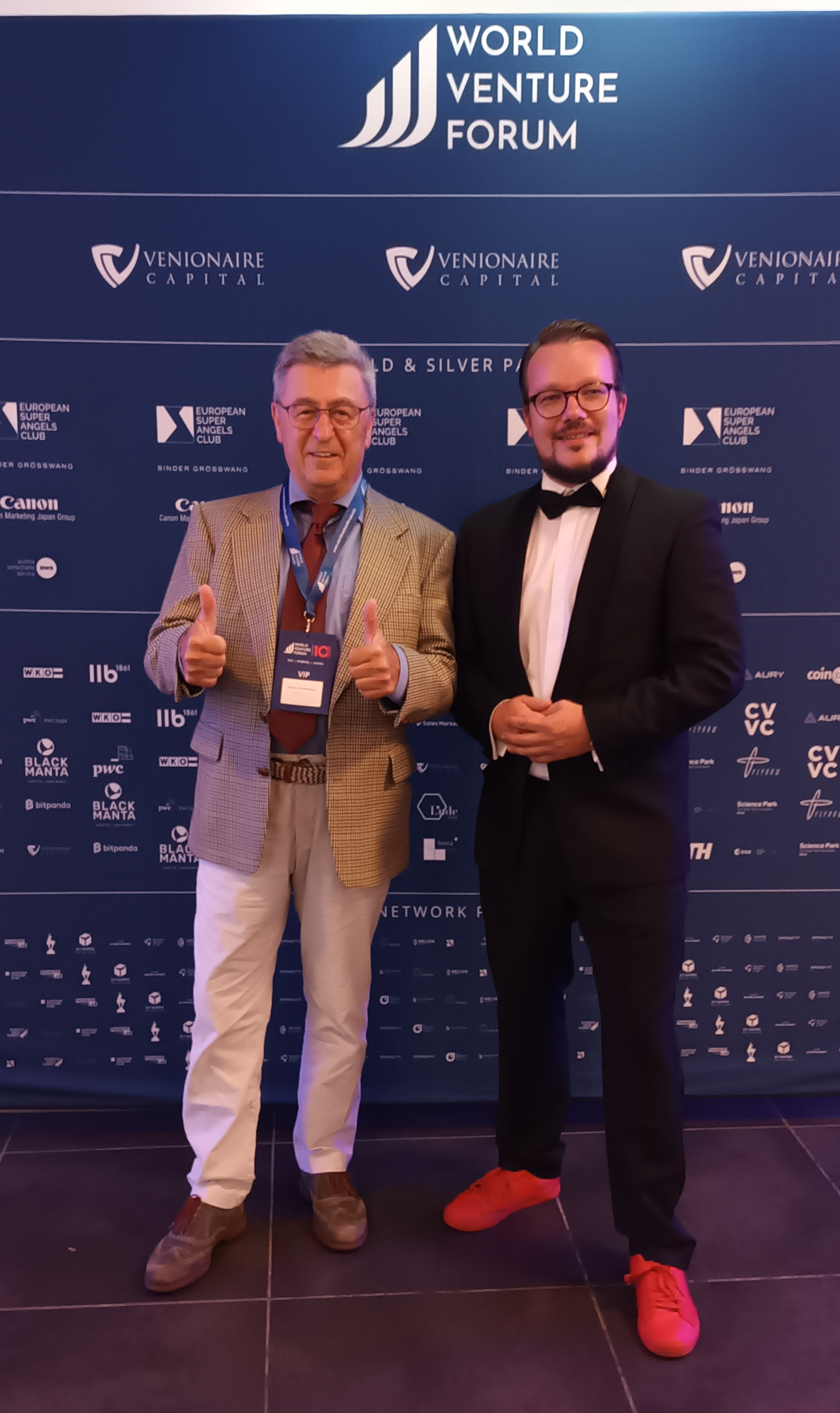
Guenter Schmittberger
Guenter Schmittberger is a global fundraising strategist and ecosystem builder whose three decades of experience span technology, consulting, impact investing, and regenerative economic development. As part of the leadership team at Transnational Business Solutions (TBS), he works at the intersection of capital and purpose—helping early-stage, mission-driven startups and venture funds connect with aligned investors who can accelerate solutions for people and planet. His work is grounded in a commitment to elevating diverse founders, with a special focus on female-led teams and entrepreneurs from emerging and frontier markets who often face disproportionate barriers to funding.
Across Europe, Africa, Asia, and the Americas, Guenter champions investment strategies that combine advanced technology with locally grounded knowledge, reconnecting economic activity with ecological realities. His contributions to the Federal Initiative for Impact Investing in Germany and his active role in Catalyst Now reflect his broader mission: building trust-based, globally connected networks that mobilize meaningful capital toward the Sustainable Development Goals.
Through this work, Guenter aims to reshape traditional investment paradigms and support a more regenerative, equitable, and resilient global economy.
“Impact is a continuous commitment to building systems that are more equitable, regenerative, and compassionate.”
Guenter, tell us about how your work intersects with the impact space.
As part of the leadership team at Transnational Business Solutions (TBS), I help impact-oriented startups and venture funds connect with the right investors to scale solutions that genuinely move the world forward. Much of my work focuses on early-stage ventures that combine technology, purpose, and strong execution capacity. I am especially committed to elevating female-led and co-led companies, as well as founders from emerging and frontier markets who often face significant barriers to capital.
I believe deeply in the power of diverse networks. At TBS, we bring together perspectives from Europe, Africa, Asia, and the Americas, creating bridges between investors, founders, and domain experts. Many of the solutions I support blend advanced technology with local or indigenous knowledge — a combination I see as essential for reconnecting economic activity with ecological realities. This lens informs my contribution to the Federal Initiative for Impact Investing (BVII) in Germany, where we advocate for regenerative investment practices and for mobilizing substantial private and institutional capital toward measurable social and environmental outcomes.
I am also an active member of Catalyst Now (formerly Catalyst 2030), where I continuously learn from global social innovators working to transform systems and accelerate progress toward the SDGs. These collaborations reinforce my belief that large-scale change requires not just capital, but trust-based networks, locally grounded knowledge, and a willingness to challenge traditional investment paradigms.
My work is ultimately about building these bridges — so more impactful ideas can reach the resources they need to create lasting, inclusive, and sustainable change.
What is your own definition of impact?
For me, impact means contributing to a world where everyone has a fair chance to thrive. It’s about ensuring that no one is left behind and that diversity, dignity, and respect for people and nature guide our decisions. Impact is not a single action—it’s a continuous commitment to building systems that are more equitable, regenerative, and compassionate.
Guenter, what do you see as the most important issue to address in the next 10 years?
Many of today’s challenges are deeply interconnected, so choosing a single priority is difficult. But based on my experience, the most urgent issue we must address over the next decade is how we respond to the accelerating climate crisis in a way that is both equitable and regenerative.
We need to rapidly phase out the burning of fossil fuels and restore natural ecosystems, because biodiversity loss is weakening the resilience of our entire planet. At the same time, wealthy countries must take far greater responsibility in supporting low-income and climate-vulnerable regions. These communities contribute the least to global emissions yet suffer the most from extreme weather, rising temperatures, and food insecurity. A just transition is impossible without meaningful global solidarity.
Since it is now unlikely that we will stay within the 1.5°C limit, we must also prepare for more severe climate impacts. This includes building resilient infrastructure, strengthening local food and energy systems, and supporting communities in adapting to harsher and less predictable environmental conditions. It may get worse before it gets better, but this makes timely action even more essential.
A second, equally important layer is the ethical use of artificial intelligence. AI has the potential to improve health, education, and climate solutions — but only if we ensure it empowers people instead of widening inequalities or transferring more wealth from the poor to the rich.
Solving the climate crisis and ensuring ethical AI governance are inseparable. Both determine the future of human wellbeing and planetary stability.
What is the greatest challenge you face to scale your impact?
One of the biggest challenges in the impact space is the persistent concentration of power and capital in the hands of a small number of decision-makers. This centralization slows down innovation, limits diversity of thought, and perpetuates traditional investment patterns that favor low-risk, high-return models rather than transformative solutions. Many impactful enterprises, especially those led by women, local founders, or teams in emerging markets, struggle to access the capital they need — not because their solutions are weak, but because existing financial systems were not designed with inclusive impact in mind.
Another challenge is the global rise of conflict and geopolitical instability. The increasing militarization and arms spending divert enormous financial and political resources away from climate action, health, education, and regenerative development. Wars also destroy trust, disrupt supply chains, and create environments where long-term impact projects become almost impossible to implement.
Ultimately, many of these issues stem from what I would call unreasonable collective behavior — short-term thinking, fear-driven politics, and profit models that ignore ecological and social boundaries. Humanity often behaves in ways that undermine its own future.
To accelerate solutions, we need investment structures that democratize access to capital, global cooperation instead of division, and a shift toward long-term, regenerative thinking. Only then can the impact sector deliver solutions at the speed and scale the world requires.
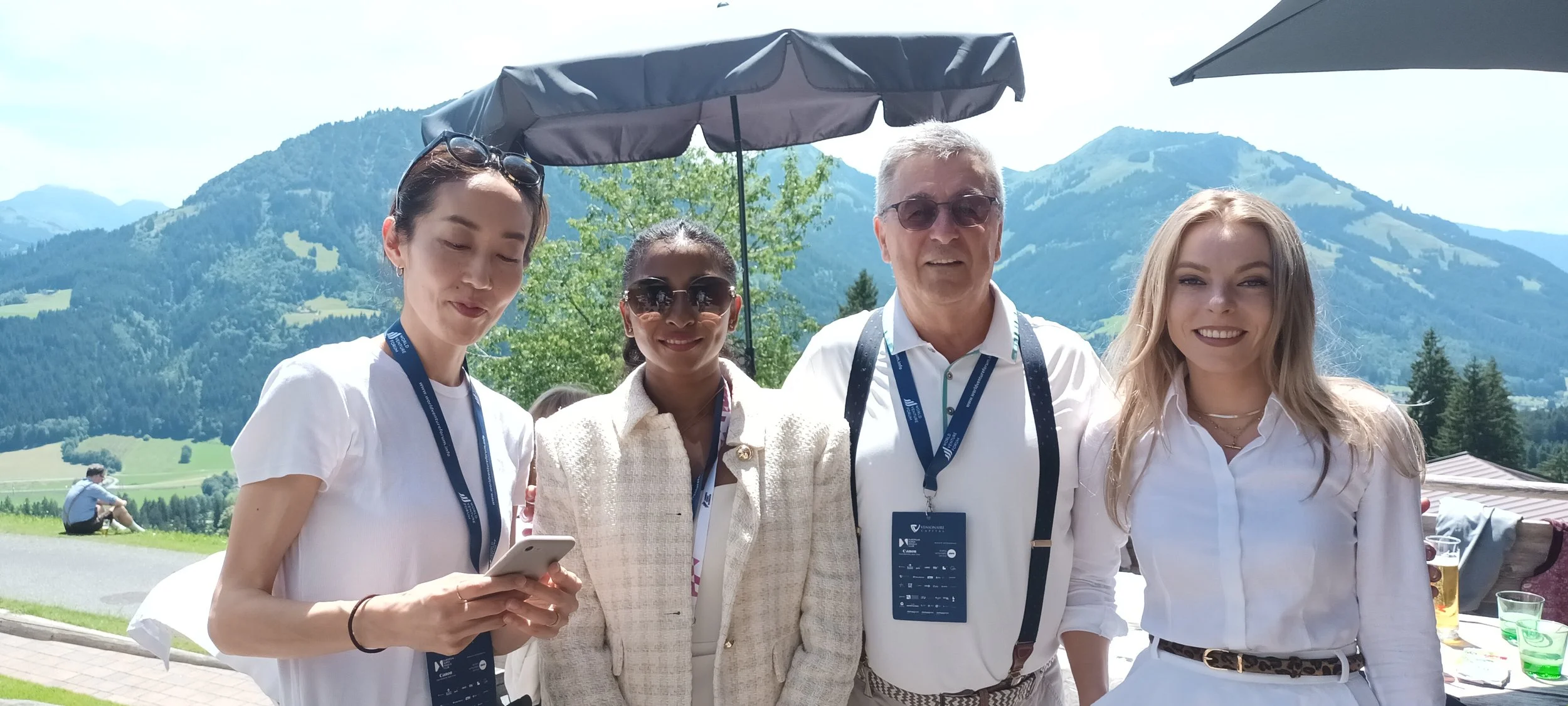
“Large-scale change requires trust-based networks, long-term thinking, and the courage to challenge traditional paradigms.”
Guenter, what is your long-term vision and how do you measure & quantify your impact?
My long-term vision is to help build an ecosystem in which purpose-driven founders and impact-aligned investors can find each other more easily and collaborate with greater trust. Over the next years, I hope to inspire a younger generation of fundraisers, analysts, and ecosystem builders to continue and expand this work well beyond my lifetime. The global challenges we face will not be solved by one generation alone, and I see it as part of my responsibility to pass on knowledge, networks, and principles that can accelerate impact at scale. A central part of my vision is to mobilize as much capital as possible for startups and venture funds that are committed to measurable progress on the Sustainable Development Goals. My projects span healthcare, climate tech, energy transition, agriculture, education, and regenerative business models — so the specific outcomes vary widely. In many cases, my contribution is indirect but meaningful: when a founder secures funding, new jobs are created, health outcomes improve, communities gain access to essential services, and innovations with planetary relevance move forward. Although I do not quantify all impact outcomes myself, I increasingly collaborate with investors and founders who apply rigorous frameworks such as SDG alignment, Theory of Change, impact KPIs, and outcome tracking. What matters most to me is that the capital I help unlock flows toward solutions that improve lives, protect nature, and strengthen resilience. Finally, I aim to do this work for as long as I can — while maintaining a healthy balance with my personal life, which I see as a key part of sustaining long-term impact.
What are some misconceptions you’ve noticed regarding what “impact” is all about?
We are experiencing unfair financial and economic systems around the globe, and it is not easy to escape the short-term profit maximization pressure of these systems. Companies are stuck between what they would like to do from an ethical point of view and what they need to do due to a worldwide destructive competition. Leaders often do not know how to escape these pressures from two sides. Then, behavior can lead to inconsistencies.
It needs extreme strong personalities for transparent and authentic behavior in leadership positions both in business and in politics.
To escape this, leaders need to connect with like-minded people and overcome the short-term dominance of thinking. Obviously, many people cannot escape their shackles.