
David Gonzalez: Turning Dormant Industrial Science Into Everyday Climate Solutions

David Gonzalez
David Gonzalez is Co-CEO of EZYNOS, the materials infrastructure company for everyday objects priced under €50.
He spent 15 years in elastomer science at Michelin, where he filed more than 20 international (WO) patents before applying that expertise to the everyday economy. He further specialized in business strategy and purpose-driven business models through Harvard Business School.
Together with Co-CEO Laura Serre, he validated the model in the pet hardgoods market over 42 months, achieving 18 times greater measured durability at shelf-price parity while introducing the emerging category they call lean deeptech: innovation by transposition.
"The most underrated impact work of the next decade is not inventing the extraordinary. It is fixing the ordinary, at parity, with science that already exists."
David, tell us about how your work intersects with the impact space.
I spent 15 years in elastomer science at Michelin, where I watched two worlds ignore each other. On one side was an industry where materials are engineered to withstand a decade of use, backed by 50 years of qualified R&D. On the other was the everyday economy of products priced under €50, where margins cannot support that level of scientific investment. As a result, products are designed to be repurchased, embedding around 200 megatonnes of CO₂e every year in items the world buys again and again.
EZYNOS is the bridge between those two worlds. We call our approach lean deeptech: innovation by transposition. We develop proprietary formulations by adapting science that other industries have already funded, create the production playbook, and manufacture through existing Tier 1 factories using a fabless model, allowing durable products to be sold at the exact same price as the disposable alternatives they replace.
Our first market, pet hardgoods, demonstrates that this model works. Over 42 months, our products achieved 18 times the durability of the market baseline at the same shelf price, with a 0.17% return rate and more than €550,000 in revenue generated from just €30,000 of founder capital. Our impact is structural rather than declarative: every durable product that replaces a disposable alternative avoids 13.3 kilograms of CO₂e without asking consumers to pay more or change their behaviour. We call this climate by architecture.
What is your own definition of impact?
Impact, for me, is when the sustainable option becomes the default, at no premium and with no effort required from anyone. As long as it depends on a subsidy, regulation, or daily willpower, it fades when the subsidy ends or attention shifts elsewhere. Impact that is embedded in the architecture of a product, in its molecule, its price, and its distribution, compounds silently.
There is a second dimension to impact that I have seen and experienced from the inside. In the great industrial R&D organisations, most patents never reach the markets of the companies that filed them. Hidden within those portfolios are remarkable innovations: science that has been funded, proven, and then shelved simply because it has no destination. Build the bridge, and that dormant science can serve industries it was never originally intended for, creating an economy in which everyone benefits: the corporation whose idle IP gains a second life, the market that receives science it could never have afforded to develop, and the planet, which no longer pays twice for the same invention. Transposition honours invention. Novelty is judged in the domain of arrival, and adapting existing science to a new market creates new, protectable intellectual property.
The final part of my definition is about who impact belongs to. The infrastructures that have changed the world are often the ones nobody notices. I want ours to exist in the same way: handed over rather than claimed, empowering the distributor who regains autonomy and the family whose product simply refuses to break. Our role is to build the standard, share the surplus, and ultimately disappear into the products of others.
David, what do you see as the most important issue to address in the next 10 years?
The decarbonization of the ordinary.The climate conversation is dominated by the spectacular frontier: new energy, new molecules, and new machines. That frontier matters. But beneath it lies a blind spot the size of a continent: the everyday economy of products priced under €50, where no price point can fund durability R&D, where everything is engineered to be repurchased, and where roughly 200 megatonnes of CO₂e are embedded every single year. Nobody owns this problem because it is nobody's flagship.
The issue to solve, then, is not primarily scientific. The science that enables products to last for decades already exists. It has been qualified, validated, and amortised by the automotive and aerospace industries over the past 50 years. The real challenge is building the bridge: creating the industrial and commercial mechanisms that transfer that dormant science into everyday markets at price parity, using factory capacity that already exists across every continent. The planet does not have 15 years to wait for new invention cycles when 50 years of proven science is already sitting on the shelf.
That is why we named lean deeptech as a category rather than keeping it as a company strategy. A bridge that depends on one person's experience is an accident. A bridge that is named, documented, and shared becomes a discipline that others can replicate. The world's most important challenges are never solved by a single actor. They are solved when a method becomes common property.
What is the greatest challenge you face to scale your impact?
In my sector, the biggest obstacle is not missing science. It is missing translation, and the bridges are missing at three levels of the system.
The first missing bridge is on the science side: dormant IP has no exit door. Large industrial groups measure innovation by what they file, not by what gets deployed, and there is no mechanism, internal or external, for a patent with no destination in its owner's markets to go and live elsewhere. Technology transfer was built to move science out of universities, not off corporate shelves. So decades of solutions remain legally alive and economically dead.
The second missing bridge is human: the translator profile is neither trained nor celebrated. We teach engineers to invent, never to transpose. Reading a science deeply in one world, reading a market deeply in another, and speaking the industrial language of the factories that connect them, no school teaches that combination, and the ecosystem glorifies the inventor while the bridge builder stays invisible. As long as that profile remains a biographical accident rather than a discipline, every bridge will be an accident too.
The third is capital, and one sentence is enough: capital funds what it recognises, and being calibrated on software and invention deeptech, it reads everything else slowly, and slowness here is measured in years of delay for solutions the climate cannot wait for.
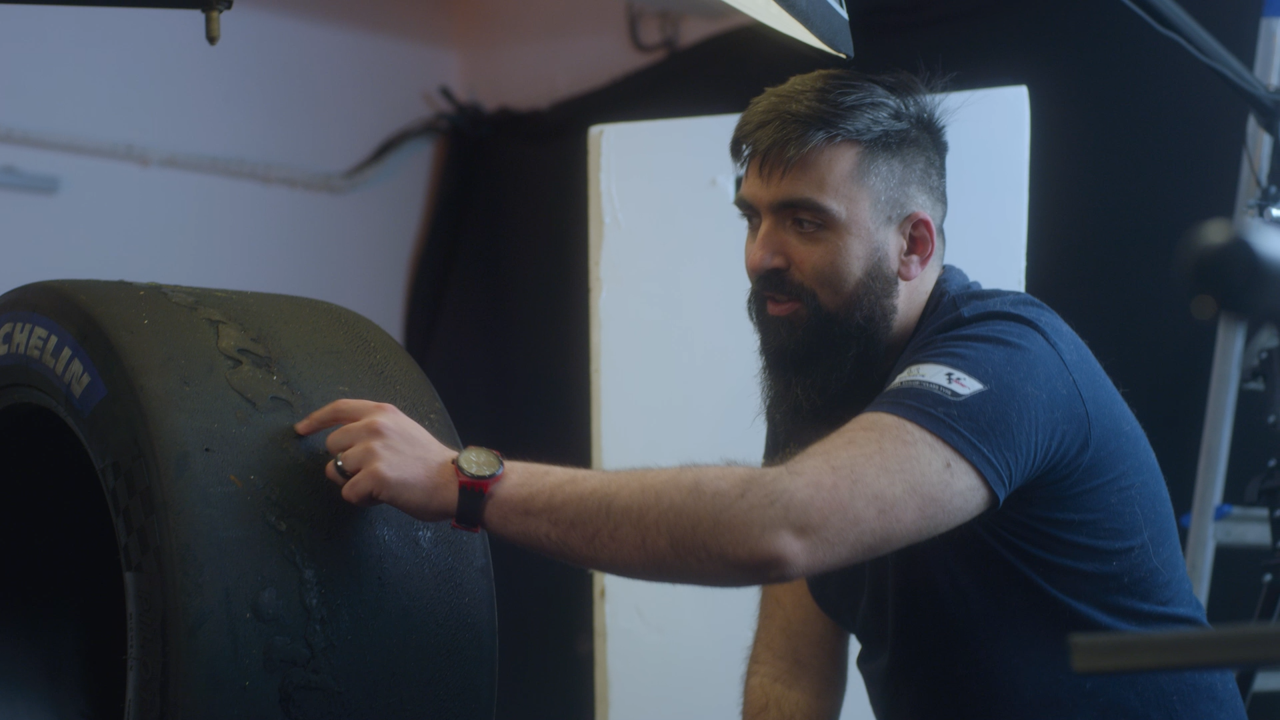
"Impact, for me, is when the sustainable option becomes the default, at no premium, with no effort from anyone."
David, what is your long-term vision and how do you measure & quantify your impact?
The long-term vision is a standard layer for the everyday economy. Every category under fifty euros that runs on replacement, from pet hardgoods to homeware, stationery and sports equipment, can receive its transposition: durable by formulation, produced on factory lines that already exist, sold at the price of the disposables it replaces. Pet is our proof of principle, and every adjacent category is a deployment, not a moonshot, because replicating costs the price of an adaptation, not of a factory. And the vision is larger than one company. We are documenting the transposition playbook rigorously enough that other founders will one day run transpositions we never will, in optics, coatings, textiles or power electronics. The logical horizon of lean deeptech is a platform that industrialises transposition itself, because a category only becomes real when it is populated.
My ambition is that in ten years, the bridge builder is a recognised profession, and the shelves of the great R&D houses are read as reserves rather than archives. We measure our impact in physical units, kept deliberately simple. Each object that replaces its disposable equivalent avoids 13.3 kilograms of CO2e. Twenty tonnes have been avoided so far, counted only once the objects live in the field. And projections stay projections until the field confirms them.
What are some misconceptions you’ve noticed regarding what “impact” is all about?
The first misconception is that impact must cost more. The green premium is treated as a law of nature, when it is only a design failure. When a technology inherits R&D that other industries already paid for, it can sell at the exact price of what it replaces. In our experience, the market does not ask for green premiums at all; it asks for green discounts, and price parity is the minimum ticket to scale.
The second is that impact is about changing consumer behaviour. An enormous amount of energy goes into asking people to try harder, and it quietly outsources responsibility to the individual. Architecture beats willpower. Our customers change nothing: same shops, same prices, same habits. The molecule does the work. If your impact model requires millions of people to become better versions of themselves every morning, it is not a model; it is a hope.
The third is that impact scales with spectacle. Capital and attention chase the heroic frontier, fusion, carbon capture, new molecules, while the ordinary economy hides in plain sight. A dog bowl is not glamorous, but the objects nobody looks at embed around 200 megatonnes of CO2e every year. The most underrated impact work of the next decade is not inventing the extraordinary. It is fixing the ordinary, at parity, with science that already exists.
Get Involved
Interested in connecting with our private global network of investors, founders, and experts building real, scalable solutions? Learn more and apply to join the Top Tier Impact Network and access future convenings, collaborations, and deal flow.