
Cesare Pesci: Impact Is Not a Trade-Off. It Is the Business Model.

Cesare Pesci
Cesare Pesci is an Associate at YXS Capital with a strong background in venture capital, growth equity, and technology investments. He has supported the deployment of over $10.4 million in investments and contributed to raising more than $71 million for unique founders across the tech and AI landscape. Cesare has hands-on experience in investment banking, sustainable finance, trading, and consulting, and excels in multinational, high-performance environments. Currently completing his MSc in General Management and Analytics at Copenhagen Business School, where he is also minoring in Risk Management, Cesare previously earned a BSc in International Business from CBS, the most competitive undergraduate business program in the Nordics. He has lived, studied, and worked in Italy, France, the UK, Japan, and Denmark, making him highly adaptive and culturally perceptive. Native in French and Italian, Cesare is also fluent in English and Spanish. Recognized for his international perspective, technical finance skills, and relentless drive, Cesare is valued by peers as both a competitor and a bellwether for high standards. He continues to support the global innovation ecosystem through his work at YXS, pairing rigorous analysis with a hands-on, founder-friendly approach.
"The biggest challenges aren't technological. They're structural: capital patient enough to match innovation timelines, regulatory systems fast enough to match deployment urgency, and talent allocation rational enough to recognize that the highest-impact opportunities are also the highest-return opportunities."
Cesare, tell us about how your work intersects with the impact space.
I'm an Associate at YXS Capital, where I support our $200M Fund II raising campaign and conduct due diligence on growth-stage companies at the intersection of advanced technologies and global transformation. My work focuses on identifying and backing founders building solutions in AI, robotics, clean energy, fintech, robotics, and defense technology, sectors where innovation directly addresses systemic challenges like climate change, energy security, supply chain resilience, and democratic access to financial infrastructure.
The impact dimension of my work manifests in three ways. First, a significant portion of our pipeline targets clean energy, sustainable infrastructure, and climate tech companies. These investments aren't just financially compelling, they're essential to decarbonization, grid modernization, and energy independence. I evaluate companies developing next-generation battery technology, renewable energy infrastructure, and carbon capture solutions, ensuring our capital flows toward technologies that accelerate the global energy transition while delivering institutional returns. Second, our fintech and AI investments focus on expanding financial inclusion and operational efficiency for underserved markets. Companies like Mercury, which we backed, have democratized banking for startups and SMBs, while our AI portfolio companies are building tools that reduce cost barriers to automation, data analysis, and decision-making for businesses globally. Impact here means enabling economic participation and productivity at scale. Third, through our defense and dual-use tech mandate, I work with companies building technologies that enhance national security, supply chain resilience, and critical infrastructure protection. These investments support democratic societies' ability to protect their citizens, secure supply chains against geopolitical shocks, and maintain technological sovereignty, outcomes with profound societal impact beyond financial returns.
At YXS Capital, we measure impact not as a trade-off against returns but as a driver of long-term value creation. The most transformative technologies solve humanity's hardest problems while generating exceptional financial outcomes, and that alignment is what I find most compelling about venture capital.
What is your own definition of impact?
Impact is the creation of durable, scalable solutions to systemic problems that improve human flourishing and planetary health, measured by outcomes that persist beyond any single transaction, company, or investment cycle. For me, impact has three essential characteristics. First, it must be economically sustainable. Solutions that require perpetual subsidies or concessionary capital don't scale and ultimately fail to reach the populations or problems they're meant to address. True impact generates returns precisely because it solves real, urgent problems that people and institutions will pay to fix. Second, impact must be measurable and verifiable. Vague claims about "doing good" aren't enough, I need quantifiable outcomes like carbon eliminated, people served, infrastructure secured, or productivity unlocked, validated by third parties and comparable across investments. Third, impact must create systems change, not just individual wins. The highest-impact investments don't just build one successful company, they catalyze entire industries, shift capital flows, influence policy, redirect talent, or force incumbents to adapt. They change what's possible and what's normal. In practice, this means I look for companies where impact and financial performance are mutually reinforcing. A fintech platform that democratizes banking access grows faster because it serves an underserved market. A clean energy technology that's cheaper and more reliable than fossil alternatives captures market share because of economics, not altruism. A defense technology that secures critical infrastructure attracts government contracts because it solves national security problems. Impact isn't a nice-to-have feature bolted onto a business model, it's the core reason the business exists and why it will succeed. That alignment is what separates impact investing from charity on one side and greenwashing on the other. It's also why I believe venture capital, done right, is one of the highest-leverage tools for solving humanity's hardest problems while delivering exceptional returns to investors who share that vision.
Cesare, what do you see as the most important issue to address in the next 10 years?
The Critical Issue: Energy Security and the Clean Energy Transition
Based on my work at YXS Capital evaluating hundreds of companies across AI, defense, and infrastructure, I believe the global energy transition, specifically, achieving energy security while decarbonizing at scale, is the most critical challenge of the next decade.
This isn't just a climate issue; it's a geopolitical, economic, and technological imperative that touches every sector I work in:
Why Energy is the Foundational Problem:
Geopolitical Stability: Europe's energy crisis following Russia's invasion of Ukraine exposed how energy dependence creates strategic vulnerability. Nations need domestic, secure, and resilient energy systems to maintain sovereignty and economic stability.
AI and Compute Infrastructure: The AI revolution I track daily, from foundation models to physical AI and robotics, is fundamentally constrained by energy availability. Training next-generation models requires exponentially more power, and deploying AI at scale (autonomous vehicles, smart cities, industrial automation) demands grid infrastructure that doesn't yet exist at the necessary capacity or reliability.
Climate Commitments vs. Economic Growth: Emerging markets face an impossible trade-off: industrialize using cheap fossil fuels or sacrifice growth for climate goals. We need breakthrough technologies, advanced nuclear (SMRs), fusion, next-gen batteries, green hydrogen, carbon capture, that make clean energy cheaper and more reliable than fossil alternatives, not just morally preferable.
Why This Decade is Critical:
The 2020s represent a narrow window. Capital is mobilizing ($2T+ in government funding via IRA, EU Green Deal, etc.), technology is maturing (solar/wind cost curves, battery density improvements, AI-driven grid optimization), and political will exists. But if we don't deploy scalable solutions by 2035, we lock in infrastructure that perpetuates carbon dependency for another generation.
The Venture Capital Role:
My work focuses on backing the technologies that solve this: companies building grid-scale energy storage, AI-optimized energy management systems, advanced nuclear reactors, and carbon-negative industrial processes. These aren't charitable bets, they're massive market opportunities where impact and returns align. The winners will be trillion-dollar companies that power the next century of civilization.
Energy underpins everything: economic growth, national security, climate stability, and technological progress. Solving it unlocks solutions to dozens of downstream problems. That's why it's my focus, and why I believe it's the defining challenge of our generation.
What is the greatest challenge you face to scale your impact?
Biggest Challenges in the Impact Space: Capital Structure, Regulatory Friction, and Deployment Speed
Working at the intersection of venture capital and impact-driven technologies (clean energy, AI infrastructure, defense tech), I see three systemic challenges that slow the deployment of solutions:
1. Misaligned Capital Structures and Risk Tolerance
The most transformative impact technologies, advanced nuclear, grid-scale energy storage, carbon capture, next-gen materials, require patient, deep-pocketed capital that traditional venture timelines can't support. These are capital-intensive, hardware-heavy businesses with 7–10 year development cycles before meaningful revenue. Yet most VC funds operate on 3–5 year deployment windows with LP expectations for quick markups.
The result: Promising technologies get starved in the valley of death between R&D grants and commercial scale. We need more hybrid capital structures (venture + project finance + government co-investment) and longer fund tenures, but institutional LPs are often structurally constrained from committing to 15-year funds, even when the impact and financial opportunity justify it.
2. Regulatory Lag and Permitting Bottlenecks
In clean energy and infrastructure, regulatory approval timelines kill momentum. A breakthrough battery technology or small modular reactor design can take 5–10 years to navigate permitting, environmental reviews, and grid interconnection queues, even when the technology is proven and economically superior to incumbents.
Example from my work: Companies building next-gen energy storage or advanced nuclear face fragmented state-by-state regulations, outdated federal frameworks (for instance, NRC approval processes designed for 1970s reactor designs), and NIMBY opposition that delays projects indefinitely. By the time approvals come through, capital has moved on, teams have disbanded, or the competitive window has closed.
We need: Fast-track regulatory pathways for climate-critical technologies, streamlined permitting for proven innovations, and federal preemption of obstructionist local regulations, but political will is inconsistent.
3. The "Impact Premium" Perception and Talent Allocation
There's a persistent myth in venture that impact = concessionary returns. This drives top-tier capital and talent toward pure software plays (SaaS, consumer apps) rather than hard-tech impact opportunities, even when the latter offer comparable or superior returns.
From my diligence work: I see brilliant engineers and operators choosing to build another B2B SaaS tool over joining a fusion energy startup or grid optimization company, because the perceived career risk is higher, equity comp is less liquid, and exit paths are less understood. The best impact companies struggle to recruit against FAANG compensation and late-stage unicorn equity packages.
The reality: Our portfolio proves that impact and returns align, companies like Mercury (fintech democratization) and our clean energy investments deliver top-quartile venture outcomes. But until this becomes common knowledge and more institutional LPs publicly champion impact winners, talent and capital allocation will remain suboptimal.
4. Deployment Bottlenecks: Manufacturing and Supply Chain Constraints
Even when technologies work and capital is available, scaling production is brutally hard. Clean energy hardware, advanced materials, and defense tech require specialized manufacturing, rare earth materials, and supply chains that don't exist at commercial scale in Western markets.
Example: Battery technology breakthroughs are meaningless if you can't source lithium, cobalt, and rare earths without Chinese supply chain dependencies. Building domestic manufacturing takes years and billions in capex, capital that venture alone can't provide without government co-investment (IRA, CHIPS Act, etc.).
The gap: We need industrial policy coordination between venture capital, strategic corporates, and government to de-risk manufacturing scale-up. This is starting (IRA, Inflation Reduction Act subsidies), but execution is slow and fragmented across agencies.
5. Measurement and Standardization Challenges
Impact measurement remains inconsistent and self-reported. LPs increasingly demand rigorous ESG and impact metrics, but there's no standardized framework across climate tech, fintech inclusion, or dual-use defense technologies. This creates diligence friction and skepticism.
What's needed: Industry-wide adoption of credible third-party impact verification (carbon accounting, financial inclusion metrics, supply chain transparency) that's as rigorous as financial audits. Until impact is as measurable and comparable as IRR, institutional capital will remain cautious.
Bottom Line:
The biggest challenges aren't technological, they're structural: capital patient enough to match innovation timelines, regulatory systems fast enough to match deployment urgency, and talent allocation rational enough to recognize that the highest-impact opportunities are also the highest-return opportunities. Solving these requires coordination across venture, government, and industry that's only beginning to materialize. That's where my work focuses, backing founders who navigate these constraints and building the institutional infrastructure (fund structures, LP education, policy advocacy) to accelerate solutions at scale.
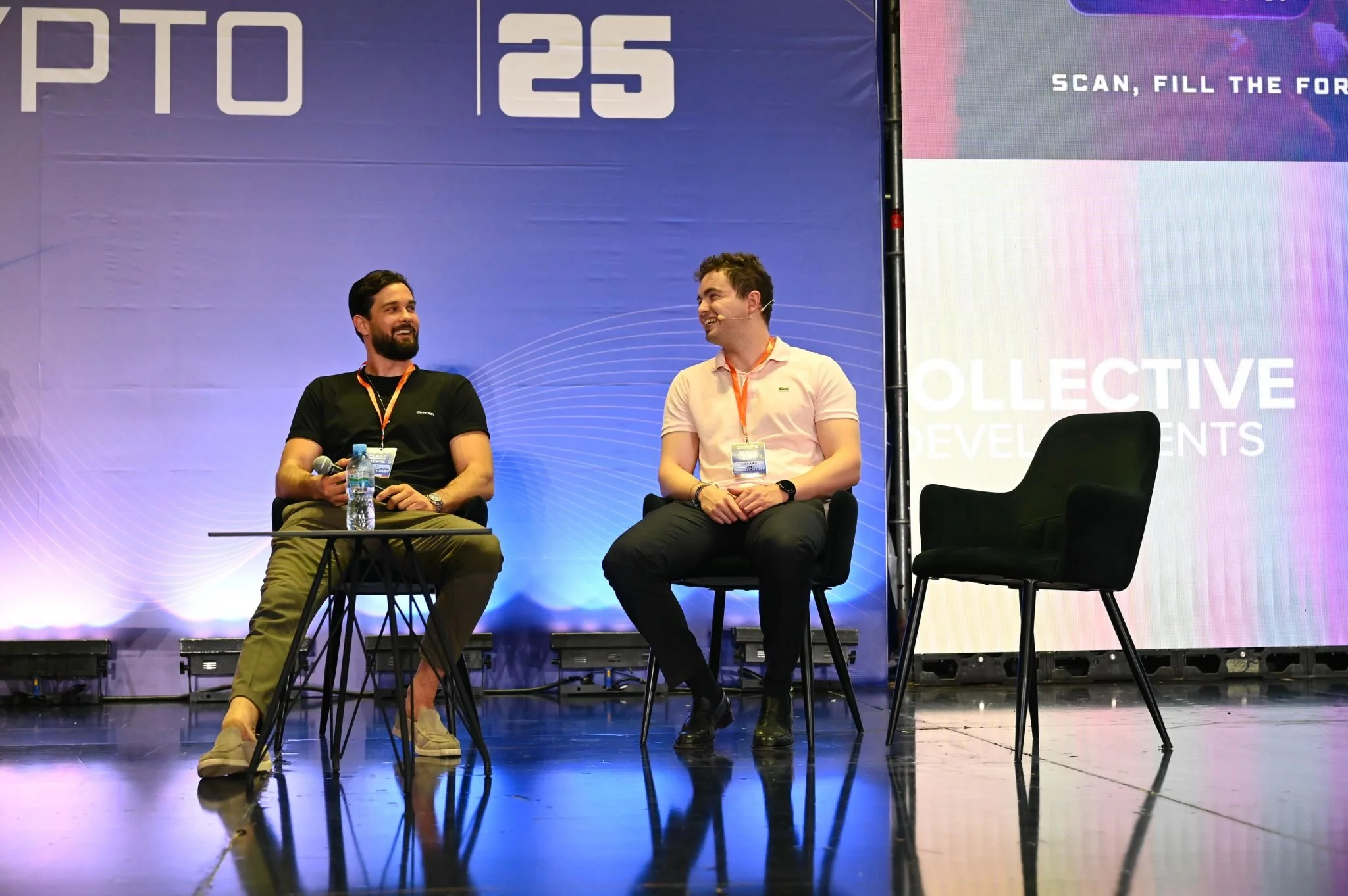
"Impact isn't a nice-to-have feature bolted onto a business model. It's the core reason the business exists and why it will succeed."
Cesare, what is your long-term vision and how do you measure & quantify your impact?
Over the next decade, I see my work at YXS Capital contributing to a fundamental shift: enabling democratic societies to achieve technological sovereignty, energy independence, and broad-based economic resilience through venture-backed innovation. Concretely, this means backing the companies that power the next industrial revolution, AI infrastructure, advanced manufacturing, clean energy systems, and secure digital infrastructure, so that Western democracies maintain technological leadership rather than ceding it to authoritarian regimes or incumbent monopolies. It also means democratizing access to transformative technologies, ensuring that AI capabilities, clean energy, financial services, and automation tools aren't luxuries for Fortune 500 companies but accessible to SMBs, emerging markets, and underserved communities. Impact at scale requires mass adoption, not niche solutions. Finally, I'm working to create a replicable model for aligned capital, proving institutionally that top-decile venture returns and measurable impact aren't trade-offs but complementary drivers of value creation. If YXS Capital's track record (zero losses, five unicorns across impact themes) becomes the benchmark, we shift industry norms and capital allocation at the LP level. Long-term, I want to look back and see portfolio companies that collectively power millions of homes with clean energy, eliminate gigatons of CO2, and secure critical infrastructure for billions of people. I want to see an institutional LP ecosystem that treats impact rigor as seriously as financial due diligence, where ESG isn't a checkbox but a competitive advantage. And I want to see a generation of founders who build transformative companies because mission and margin align, not despite it. Impact measurement in venture is notoriously difficult, too often, it's marketing narratives without rigorous metrics. At YXS Capital, I approach impact measurement the same way I approach financial diligence: data-driven, third-party validated, and benchmarked against credible standards. The first test of impact is whether it's economically sustainable. Technologies that require perpetual subsidies or concessionary capital don't scale. I also track portfolio company growth metrics like ARR growth, customer acquisition, and margin expansion, because companies solving real problems grow faster due to structural rather than discretionary demand. If it's not profitable at scale, it's not impact, it's charity. Our returns prove that impact-aligned investments are better businesses, not worse. Each investment theme has tailored, measurable outcomes. For clean energy and climate tech, I track carbon avoided or eliminated (measured in metric tons of CO2 equivalent using Life Cycle Assessment standards like ISO 14040/14044), clean energy generated in MWh, and grid resilience measured by the number of households or businesses powered by portfolio company solutions. My target is that by 2030, portfolio companies collectively avoid 10M+ metric tons of CO2 annually and power 1M+ homes with clean energy. For AI and automation, I measure productivity gains through labor hours saved, cost reductions, and efficiency improvements validated by customer case studies, as well as accessibility by tracking the number of SMBs or emerging market users gaining access to AI tools previously available only to enterprises. The goal is for portfolio AI companies to enable 100k+ SMBs to adopt automation, saving $1B+ in aggregate operational costs. In fintech and financial inclusion, I quantify underserved users reached, the number of individuals and SMBs gaining access to banking, lending, or payment infrastructure, disaggregated by geography and income, and capital mobilized for previously unbanked or underbanked populations. Mercury, one of our portfolio company, now serves 100k+ startups and SMBs, many of which couldn't access traditional banking, representing measurable financial inclusion at scale. For defense and dual-use tech, I track supply chain resilience by measuring the value of critical supply chains onshored or de-risked from adversarial dependencies, and national security outcomes through government and defense contracts awarded, critical infrastructure protected, or vulnerabilities mitigated. My target is for portfolio companies to secure $500M+ in government contracts for strategic technologies like advanced manufacturing, cybersecurity, and critical materials. I don't rely on self-reported impact metrics. Instead, I use carbon accounting standards through tools like Plan A, Watershed, or Normative for independent emissions tracking, ESG ratings such as B Corp certification, SASB standards, or GIIN IRIS+ metrics where applicable, and government or regulatory validation like IRA tax credit eligibility, DOE/DOD contracts, or EPA certifications as objective proof of impact. I also gather customer-reported outcomes through third-party case studies, peer-reviewed research, or audited impact reports documenting customer energy savings or productivity gains. For example, for a clean energy portfolio company, I track independent lifecycle emissions analysis under ISO 14040, customer-reported energy cost savings verified by utility bills, and government certifications like IRA 45V hydrogen tax credits. This creates auditable, comparable impact data that LPs can benchmark against other funds. Annually, I aggregate impact metrics across the entire YXS Capital portfolio, calculating total carbon avoided as the sum of all portfolio company emissions reductions and offsets, clean energy deployed in total MWh generated or enabled, financial inclusion reach by total underserved users served, jobs created both directly and indirectly in high-wage, high-skill sectors, and benchmark comparisons of YXS portfolio impact versus industry averages, such as carbon intensity per $1M invested. This becomes part of our annual LP reporting, just as rigorous as financial statements, but for impact outcomes. Beyond individual company metrics, I track ecosystem-level shifts. I monitor policy influence by tracking portfolio companies that inform or enable policy changes, such as IRA implementation, CHIPS Act deployment, or defense procurement reform. I observe market creation when technologies catalyze new industries or force incumbents to adapt, like Mercury's impact on startup banking forcing traditional banks to improve SMB offerings. I also track talent mobilization, engineers, operators, and capital redirected toward impact themes because YXS portfolio companies prove the model works. Measurement here includes the number of legislative references, industry standards influenced, competitive responses triggered, or capital flows into copycat funds. Impact measurement is iterative. I build feedback loops through quarterly portfolio reviews that update impact KPIs alongside financial metrics, post-exit analysis to assess whether realized impact matched projected impact and identify variance drivers, and LP feedback by incorporating institutional LP ESG diligence requirements into our reporting standards. If venture capital is going to solve humanity's hardest problems, impact must be as rigorous, transparent, and comparable as financial performance. My vision is to help institutionalize this standard, so that in 10 years, every VC fund reports carbon metrics, financial inclusion outcomes, and supply chain resilience with the same discipline they report IRR and TVPI. YXS Capital's role is to prove the model: top-decile returns, zero trade-offs, and measurable, scalable impact. If we succeed, we shift how institutional LPs allocate capital, and that's systems change at the highest leverage point in the innovation economy.
What are some misconceptions you’ve noticed regarding what “impact” is all about?
My Work and Intersection with Impact
I'm an Associate at YXS Capital, where I support our $200M Fund II raising campaign and conduct due diligence on growth-stage companies at the intersection of advanced technologies and global transformation. My work focuses on identifying and backing founders building solutions in AI, clean energy, defense technology, robotics, and fintech, sectors where innovation directly addresses systemic challenges like climate change, energy security, supply chain resilience, and democratic access to financial infrastructure.
The impact dimension of my work manifests in three ways:
1. Portfolio Focus on Climate and Energy Transition
A significant portion of our pipeline targets clean energy, sustainable infrastructure, and climate tech companies. These investments aren't just financially compelling, they're essential to decarbonization, grid modernization, and energy independence. I evaluate companies developing next-generation battery technology, renewable energy infrastructure, and carbon capture solutions, ensuring our capital flows toward technologies that accelerate the global energy transition while delivering institutional returns.
2. Democratizing Access Through Fintech and AI
Our fintech and AI investments focus on expanding financial inclusion and operational efficiency for underserved markets. Companies like Mercury have democratized banking for startups and SMBs, while our AI portfolio companies are building tools that reduce cost barriers to automation, data analysis, and decision-making for businesses globally. Impact here means enabling economic participation and productivity at scale.
3. Dual-Use Technologies for Security and Resilience
Through our defense and dual-use tech mandate, I work with companies building technologies that enhance national security, supply chain resilience, and critical infrastructure protection. These investments support democratic societies' ability to protect their citizens, secure supply chains against geopolitical shocks, and maintain technological sovereignty, outcomes with profound societal impact beyond financial returns.
At YXS Capital, we measure impact not as a trade-off against returns but as a driver of long-term value creation. The most transformative technologies solve humanity's hardest problems while generating exceptional financial outcomes, and that alignment is what I find most compelling about venture capital.
Get Involved
Interested in connecting with our private global network of investors, founders, and experts building real, scalable solutions? Learn more and apply to join the Top Tier Impact Network and access future convenings, collaborations, and deal flow.