
Rethinking Economic Paradigms: Gregory Wendt on Regenerative Finance
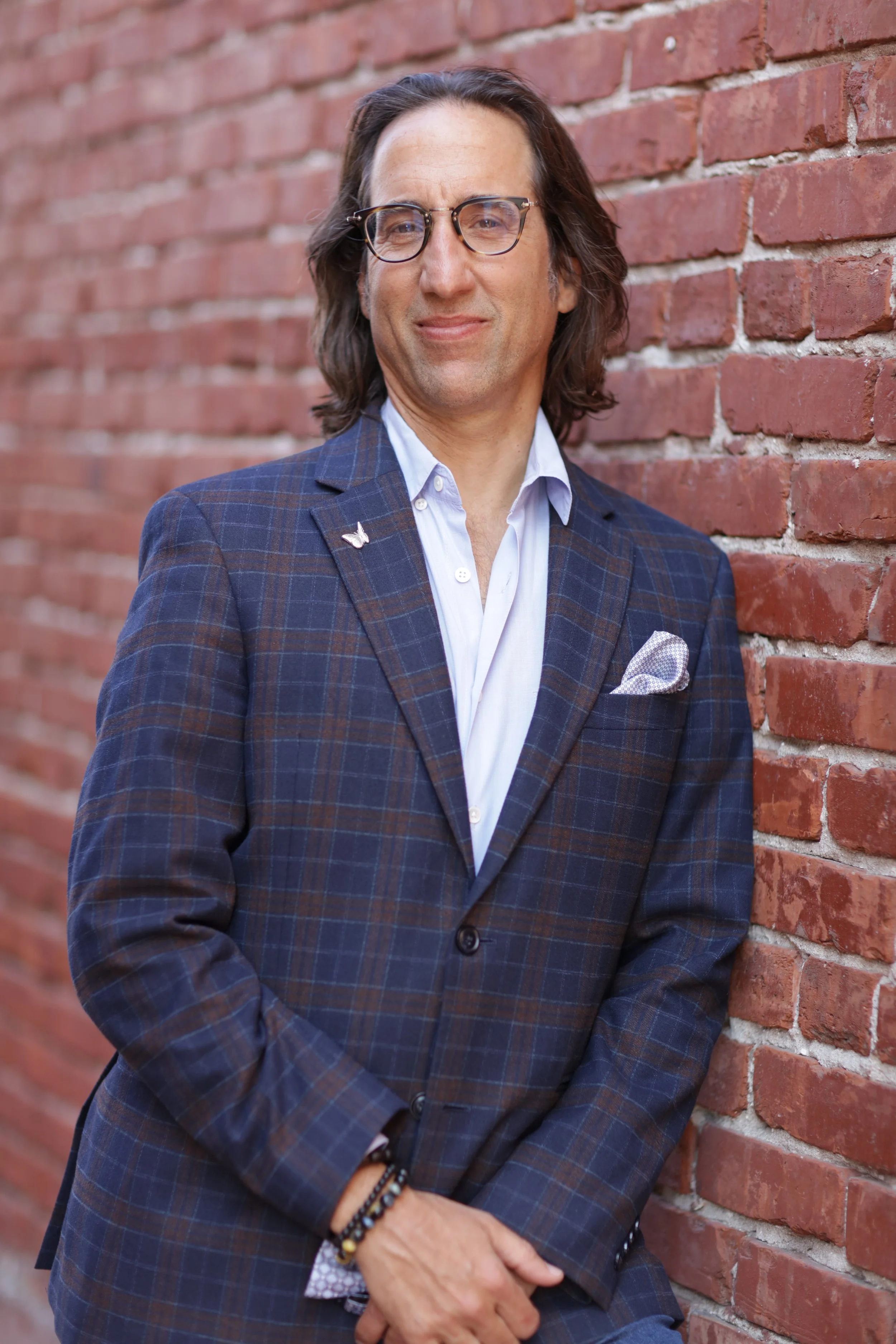
Gregory Wendt
Gregory Wendt has spent more than 30 years at the intersection of capital markets, living systems, and the slow work of shifting paradigms. His path has moved from the early days of socially responsible investing through the emergence of impact investing and into what he now calls regenerative finance - grounded in bioregionalism, biomimicry, and the recognition that economy is not separate from life. Through GaiaVision, he is building living laboratories for place-based regenerative economic development in communities and bioregions around the world.
“Impact isn’t just about better investments - it’s about expanding the paradigm that guides the entire economic system.”
Gregory, tell us about how your work intersects with the impact space.
I grew up in California — four generations in the Los Angeles area. In my early days, I lived in the inner city. I was the only Caucasian white child in my class in elementary school until I was in third grade. And then we moved to the suburbs, which was kind of the opposite demographics. I used to walk from our home down to the seashore where the school was, going down to the cliffs and into the tide pools and into the ocean.
So by the time I was eight years old, I kind of saw the range of societal problems and also the environmental problems — the ecological challenges — because the suburbs we were living in were already deeply affected by different kinds of pollution. I was a very curious child interested in science, biology, space, and chemistry. I knew that certain animals were affected by certain kinds of pollution, and I learned how ecosystems were affected by human behaviour. And I also saw how society was affected deeply by racial tensions. So I kind of got the full spectrum by the time I was eight years old of the world situation, and that informed my worldview.
Years later, my parents went through a divorce, and that put me on a spiritual journey. By the time I was fourteen, I was thinking to myself: these are challenging things in family dynamics, and I need to do my own inner spiritual work. And that set me on the spiritual path, and that led me to become curious about the Eastern traditions. By the time I was in college, I was involved with a meditation and yoga tradition from the East — living in a meditation centre while also studying computer science, chemistry, physics, economics, and the cultural behaviour of different countries. I was getting a full multidisciplinary education while living in a meditation centre, studying not only the Eastern traditions but the mystical traditions of every culture and faith.
So it was a pretty broad spectrum that made me ready, I think, for the idea of sustainable development. The concept of sustainable development is organised around a simple notion: in our human development of cities, countries, economy and society, we take care of current generations and future generations equally. We meet the needs of today's generation without compromising the needs of future generations. It is so simple. But what was astonishing to me is that I never heard anything like that in any of my other disciplines — especially not in the economics department, where it was all about GDP and money and jobs and markets. So that changed my worldview dramatically and became my mission.
In 1991, I was invited to work at Smith Barney in the bond department — I learned a great deal about municipal finance and the capital markets. In the early 2000s, I changed my practice as a wealth advisor toward what we called, at that time, socially responsible investing, and I have been exclusively a practitioner in ESG and impact investing since 2002. But then what happened is that it became evident that the capital markets operating model and the predominant paradigm taught in business schools — the economic logic that is the premise of business school curricula — is oblivious to the consequences of our business activities on the world.
Within business schools, where you have a so-called green MBA, or green mutual funds in the stock market, neither the business school nor the stock market are oriented toward sustainability and the concerns that we have in ESG and impact investing. So it became clear that I had to play a role beyond just being a practitioner in the system. I had to look very deeply at how I could be part of transforming it.
In 2006, I started my first nonprofit — the LA chapter of the Business Alliance for Local Living Economies — focused exclusively on green business networks. I did quite a few events until I realised that the local groups focused on the same topics were not really working well together. So I began bringing different groups together to co-host events, and then I created two conferences called Green Economy Think Tank to bring people together to envision what that larger systemic model would look like in a city like Los Angeles with a trillion-dollar economy. Recognising that every trillion-dollar economy — Tokyo, New York, London, Mumbai, Shanghai, Rio — faces similar challenges. Whatever we incubate in LA, in partnership with other cities, holds a global vision.
Then in 2012, I joined the steering committee of the California Economic Summit to look at how we create a regenerative and green economy — how we direct capital in a state like California. We have three trillion dollars in retirement accounts in California, but most of that is in the capital markets in the old paradigm. California has a reputation for being a leader in sustainability, yet the operating model of our economy is still the old model. So, how do we retool the logic of an economic system of a state like California? How do we retool economic development and finance at the same time?
In 2019, I worked with local and statewide leaders to create the California Capital Markets Task Force in partnership with the Milken Institute and California Forward. We were ready to go — and the funding just didn't come in due to the pandemic. I got involved with TTI at that time. And in the last couple of years, I created a firm called Gaia Vision to pick up on all of those threads and continue that work.
A more resilient and robust foundational fabric is growing for the emerging connection economy through deeper connections between disparate disciplines, groups and efforts. This foundation is essential for the broad influence and impact of visionary capital to underwrite a new civilisation that works for 100 % of humanity.
What is your own definition of impact?
The words that come to mind are systems change — but not change for its own sake. We don't want revolutionary activity just because we don't like the current world order, because impact or systems change does not necessarily guarantee the result will be better than the current system. You can see this with all the revolutions that have happened over the centuries — the revolutionaries take over, and then the same kinds of problems still happen.
So we want to actually improve and restore and regenerate, and impact has to be comprehensive and multidimensional.
More precisely: expanding the paradigm itself… one that listens to living systems and acts from a recognition that our work is in service to all life.
Our economic mindset is based on a mythos of separation and silos in thought and institutions. Economic theory lives within the illusion that the economy is separate from society, and society is separate from nature. The reality is that society rests within the womb of nature, and the economy rests within the fertile soil of society.
Gregory, what do you see as the most important issue to address in the next 10 years?
It's what I was already working on when I launched the task force. Every country, city and county has an economic development partner — the Department of Commerce, the LA County Economic Development Corp, the State of California Office of Business and Economic Development. Those are all operating from the business-as-usual old economic theory. While we in the impact community want to actually transform the economy — not just find a deal that gets us a better return that does something green, we actually want to change that. That's what I feel is the heart of our desire in impact work.
Whether you're an impact fund, an impact entrepreneur, an impact investor, or a philanthropist, all of us want the system fundamentally to move in a more beneficial direction for future generations and for all life.
So I think the most important thing is to align the paradigms. If we're doing an impact investing venture capital fund but operating in the traditional venture capital logic — the way that companies are forced to compete and the marketplace operates just for getting the money — it's just the same old venture capital with an impact cover. We have to look deeply at the implicit structure of how we relate inside the portfolios.
A good example: in TTI, a thousand companies are trying to solve the plastic problem or the renewable energy problem. The marketplace, as it's designed, is exactly what has to shift. Must we all compete when we're trying to solve the same problem? Is there a new economic order, a new set of relationships, where we can actually cooperate? But that means changing the fundamental logic of economic behaviour. It has to be instituted into the business model, into the portfolios, into the logic of how we look at due diligence. And that still has yet to be done across the spectrum of impact investing.
It's not so much what we do, but how we do it. I remember hearing years ago about someone investing in a solar panel factory, not realising until due diligence that it was operated like a sweatshop. So then they changed their investment criteria to include the social factors. It's not only what we do - it's how we do it.
We have to look at transdisciplinary and multidisciplinary approaches to examine all the layers of society and find new structures and new ways to work. The challenges we're having in the world are evidence that the old model is not working. But we don't have a new model yet. So we're right in the middle of that middle zone of developing a new framework. And that's where it's very difficult — but also very exciting.
What is the greatest challenge you face to scale your impact?
Small thinking.
“We cannot solve today’s crises with small thinking. Regenerative transformation requires a complete renewal of our economic logic.”
Gregory, what is your long-term vision and how do you measure & quantify your impact?
It's somewhat embedded in the work I've shared over the last 25 years — the various groups I've led, the communities I serve, the people I've learned from. I think it's an important principle: we are building on the history of many thought leaders and many different attempts along the same lines. Nothing I have said or that any of us are doing is actually brand new. Nature has been doing regenerative and bioregional work for four billion years. We're just innovating and building on what we've been given.
Some of that recognition is necessary — creating the conditions for people to harvest the benefits of cooperation together, of aligning in new ways, of leaning in with people who are working similarly rather than trying to differentiate in the marketplace over who's better.
Almost every major city on the planet faces the same challenges. There's a benefit for all of us in that. And the opportunity is to go deeper in listening: how do we actually innovate? And then when something works in one place, it becomes a pattern that can travel to another place. If we can create this as a learning community, an experimental community — all of us trying to innovate similar things in different ways, but sharing the results — those are some of the principles of a genuine community of practice.
At Gaia Vision, what we're envisioning is that the projects we do in different geographies — California, British Columbia, Costa Rica, the Rockies in Colorado and Wyoming — are living examples of experimental labs. Similar practices, similar things, but not identical. We can immediately look at multiple different places, cross-pollinate the gifts, create a larger study of gathering best practices data, and share that back across the different instances.
We have three dimensions of outward-facing work: the living laboratories of financial innovation; the educational and co-learning programs to make sure people understand the vocabulary, the dynamics, and the successful practices; and the deal room — what we're calling the space where something actually needs to be created: a concept, a business, a project, a municipal enterprise that requires intelligence and capital to actualize. And then the fourth element underlying all three is the taxonomy of ideas, the data, the technology platforms — the toolkit that crosses through all the other dimensions.
In a sentence: Gaia Vision is a multidisciplinary group of people working on systemic evolution through living laboratories, educational, and deal platforms.
We want to demonstrate the viability of regenerative living systems paradigms applied in economic development contexts — not in one place, not as a pilot, but in hundreds of bioregions. As a financial advisor and economist, I felt that my piece was to do what only a few around me could do, and do my part — to seek the depth and redesign of the planet's financial system. I imagined myself being part of this long into the future. I tell my friends and colleagues — I feel like I'm thirty years in on a journey that is only just beginning.
What are some misconceptions you’ve noticed regarding what “impact” is all about?
That impact can be advanced broadly as a feature of the system of thinking that is itself perpetuating obsolete business-as-usual mindsets — continuing the capital markets mindsets of competition, extraction, and siloed thinking of our current economic paradigm.
Impact investing, as we know it, has a problem. Organisations are touting deepening strategies within the sector, promising that billions of dollars of capital are funnelling into sustainable investment opportunities around the world. From most accounts, a monumental shift is upon us. However, is this really the case? Can this growth really be attributed to a growth in sentiment, or merely a growth in opportunities that provide market-rate returns? In other words, are institutional investors really adjusting their strategies for long-term sustainability, or are solar panels simply cheaper and governance structures naturally more transparent? Which axis is moving?
Most of us are unaware that we are religious fundamentalists and market fundamentalists in the religion of traditional economics. The values of the current economic system are rarely in question for those of us operating within the global economic system. Many of us rarely, if ever, consider whether concepts of limitless growth, ruthless competition, and more stuff are even up for question.
The ethos of our economy has become largely devoid of connection. We have gone from relational to transactional. Somewhere along the line, we picked up a virus in our culture's source code — one that misguided us by placing money and power as the central measuring sticks for success, fed by a rapacious economic operating system driven by the gospel of consumerism.
What is needed is not reform of this system from within, but fundamentally rewriting the source code for civilisation — and creating the conditions for people to actually harvest the benefits of cooperation together. That is the work. And I'm glad we are doing it together.
Get Involved
Interested in connecting with our private global network of investors, founders, and experts building real, scalable solutions? Learn more and apply to join the Top Tier Impact Network and access future convenings, collaborations, and deal flow.