
The Human Layer of Impact: How Katja Wallisch Supports Leaders Shaping Regenerative Systems

Katja Wallisch
Katja Wallisch is an experience architect and transformation advisor working across Europe and globally. With over 15 years across tech, fashion, hospitality, impact, and philanthropy, she supports founders, families, and organizations navigating complexity, transition, and responsibility. Her work sits at the intersection of conscious leadership, human development, and systemic change, blending strategic advisory, coaching, and immersive, place-based experiences that restore clarity, coherence, and alignment at moments where decisions carry real weight.
Katja’s impact lies in strengthening the human layer beneath leadership, capital, and innovation. She works with people shaping land, real estate, regenerative destinations, and philanthropic initiatives, helping them hold power with presence and move resources toward life-serving outcomes. Focused less on scale and more on alignment, her work ensures that regenerative futures are built on emotional maturity, relational integrity, and conscious use of influence.
“Impact is an inside job. If we don’t evolve our inner world, the systems we build will eventually collapse under the weight of unresolved fear, power, and disconnection.”
Katja, tell us about how your work intersects with the impact space.
My work sits at the intersection of human development, conscious leadership, and systemic change and is transformative and experiential in its nature. I partner with leaders, families, and organizations who are moving through meaningful transitions - where clarity can feel fragile, relational layers might be messy and decisions carry real weight.
I create transformational environments that restore coherence - within individuals, between generations, and across systems. These spaces invite a more evolved way of being, relating, and leading.
My main tools are immersive experiences and advisory/coaching work. I help the ones who hold influence stay connected to their inner compass while navigating complexity, pressure, and change.
Topics have ranged from post-exit legacy, personal realignment in transitions, to relationships and meaning. I serve as a non-linear thinking, no-BS sounding board and curate intimate high-caliber gatherings in extraordinary settings.
My signature experiences involve nature-based immersions that honor place, cultural heritage and wisdom, are fun and infused by self inquiry, human connection, consciousness practices, sometimes plant medicine.
The people I work with often bring this work into real-world contexts such as land, real estate, regenerative destinations, and philanthropic initiatives.
Regarding impact, the focus is often on solutions, innovation, and scale. All of that matters. But my focus is the human layer underneath it all: the emotional, relational, and inner terrain that ultimately determines whether those solutions can take root and last.
In essence, I support the people who shape systems to develop the coherence and presence needed to build regenerative futures.
What is your own definition of impact?
Much of the world as it is doesn’t work well. Not for humans, not for the planet. Human consciousness hasn’t caught up with the level of power we have. And if we don’t evolve our inner world, we will destroy the outer one. So, for me, impact starts much closer than we often think. It begins inside a person - in how we relate to ourselves, how we meet fear, how we make choices when no one is watching. In that sense, impact is an inside job from the beginning. It is related to our inner architecture and quality of consciousness. When something shifts within us, it doesn’t stay there. It ripples out into our relationships, into how we hold power, into how we move money, into how we treat the land and the people around us. Impact, on one hand, is the imprint we leave through how consciously and intentionally we relate, lead, and use our influence and resources to shape our ecosystems, culture, and the generations that follow. On the other hand, impact is also how aligned, authentic, and alive we feel as we shape the world around us.
Katja, what do you see as the most important issue to address in the next 10 years?
One of the most important issues of the next decade is improving how we relate to ourselves, to one another, and to the planet. Many of the solutions we need already exist. What often blocks real change is not a lack of innovation, but inherited belief systems, trauma, disconnection, and outdated models of power and success. If we don’t fundamentally shift how we consciously relate to these patterns, we will continue to recreate the same crises in new forms.
We need a deep cultural shift in how we hold power, how we process fear, and how we take responsibility - especially in business, politics, families, and education.
Raising the next generation differently is central to this shift. As a mother to a toddler girl, this is very present for me. How we model care, emotional honesty, and reverence towards our inner compass, fellow humans, and our environment will shape the future far more responsibly than any technology we develop.
What is the greatest challenge you face to scale your impact?
One of the biggest challenges I see is our collective discomfort with staying in the unknown long enough for real change to take root. We want movement, proof, and progress quickly - and when things become slow, messy, or complex, many people lose patience or try to force outcomes that aren’t ready yet. This often creates motion without true traction.
Short-term thinking adds another layer to this. What can be optimized quickly tends to be prioritized over what actually needs time, care, and depth to evolve. This slows real solutions down, even when everything appears busy and active on the surface.
Underneath this sits a quieter but powerful obstacle: exhaustion. Burnout, nervous system overload, and constant pressure reduce people’s capacity to stay present, to listen, and to hold the complexity that lasting solutions require.
And still, the most underestimated layer remains the relational one. Trust, emotional safety, honest communication, and shared meaning are often treated as secondary - even though they determine everything. Until we more fully integrate the psychological, relational, and cultural layers into how we design leadership, systems, and experiences, solutions will continue to stall at their deeper thresholds rather than moving with real speed.
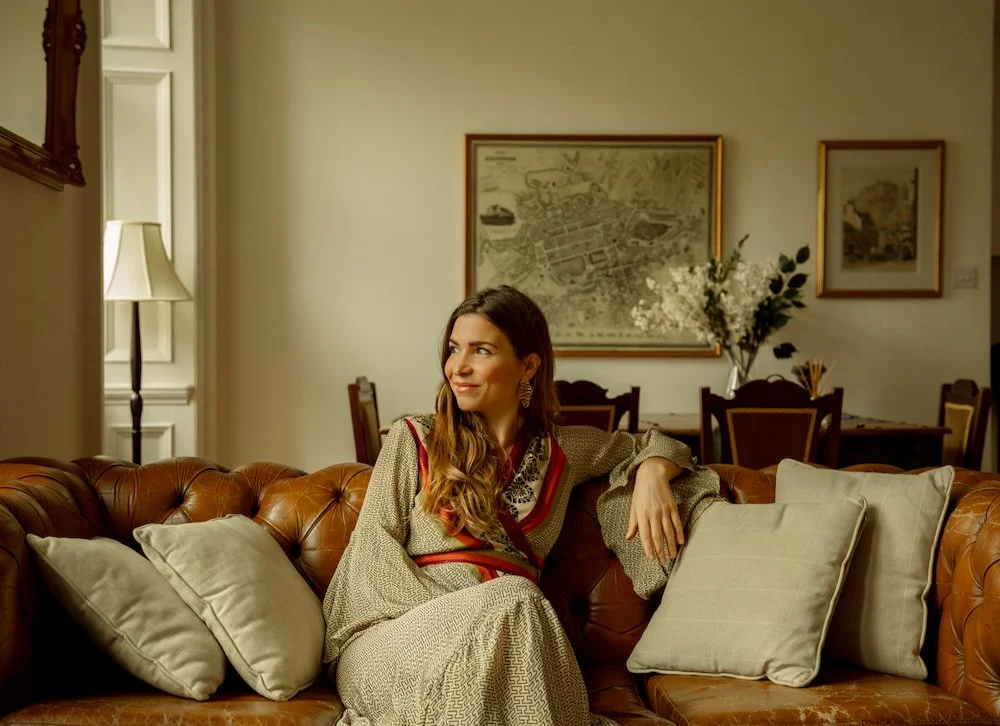
“The most decisive work in impact happens quietly, beneath the surface. Without emotional maturity and relational integrity, even the most innovative solutions cannot last.”
Katja, what is your long-term vision and how do you measure & quantify your impact?
Motherhood has brought legacy work into sharper focus for me. My long-term vision is to support people and systems that hold real leverage - those who shape capital, leadership, culture, and future direction - to move wealth, energy, and attention toward more conscious and life-serving causes. We are living in an extraordinary time: the challenges are immense, but so is the potential. We have everything we need to create meaningful, regenerative change. I work with leaders, families, founders, and organizations whose decisions affect not only markets, but also communities and future generations. I create transformative spaces and long-term advisory relationships where personal, relational, and systemic alignment can unfold together. This includes designing place-based experiences that deepen people’s connection to land, properties, and their surroundings, weaving regenerative principles with the deeply human work of becoming better at being human. These immersive journeys aim to support legacy, transformation, philanthropic initiatives, and the celebration of meaningful milestones with depth and sensory aesthetics. I measure impact less through visibility and more through qualitative shifts: how people withstand pressure, embody responsibility over time, and strengthen their relationships and power dynamics. Some outcomes show in the longevity and health of initiatives; others appear in how people live and lead afterward. And impact also shows in how we experience life - in joy, beauty, connection, and the small pleasures that make us feel fully human.
What are some misconceptions you’ve noticed regarding what “impact” is all about?
One of the biggest misconceptions I see is that impact is mainly something external - a project, a metric, a visible result. The most decisive work happens quietly, inside people and between them. How can we encourage this more?
And impact has become such a buzzword. Many initiatives focus on fixing symptoms rather than staying with the harder, slower work of addressing root causes - emotional, relational, cultural, and systemic. Are our measures really contributing to making this world better for everyone in the long-run? Let’s be honest enough with ourselves to recognize when we are just putting a bandaid on an injured limb that needs surgery and call it impact.
We see founders burn out, teams fall apart, and families struggle with alignment not because their ideas are wrong, but because the human foundation underneath the mission is under-resourced. Without emotional maturity, relational honesty, and inner stability, even the most beautiful visions tend to fracture under pressure.
For me, impact isn’t about scale first. It’s about alignment. Without that, nothing truly lasting can grow.
Get Involved
Interested in connecting with our private global network of investors, founders, and experts building real, scalable solutions? Learn more and apply to join the Top Tier Impact Network and access future convenings, collaborations, and deal flow.